Autonomous field intelligence
Orioos v2.0®
A fully electric, modular autonomous ground robot for perimeter surveillance and crop monitoring across outdoor and mixed-terrain environments.
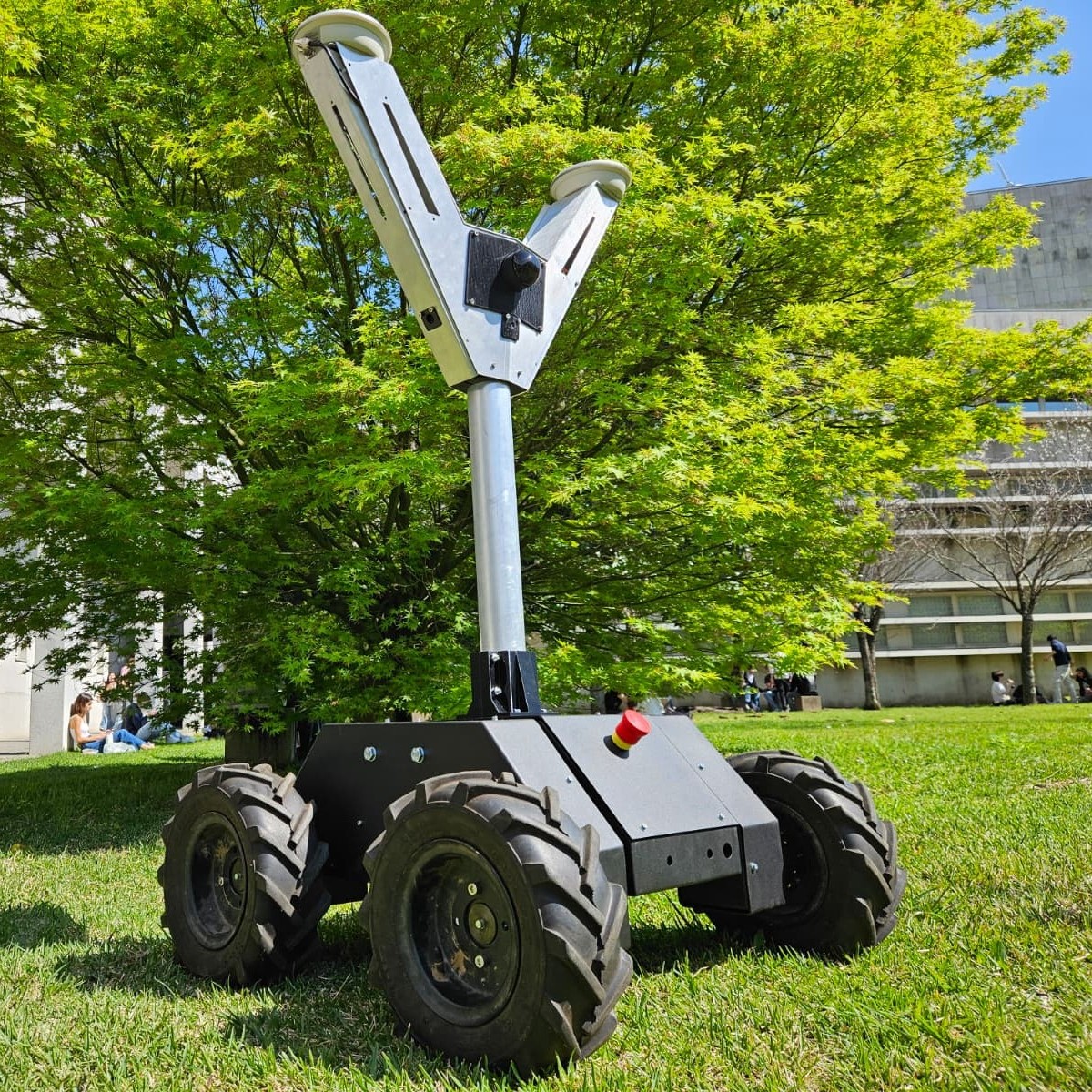
A fully electric, modular autonomous ground robot for perimeter surveillance and crop monitoring across outdoor and mixed-terrain environments.
A short silent view of the platform’s movement, form factor, and field-ready design.
Orioos performs autonomous missions along configurable routes, combining reliable field mobility with perception, edge processing, and cloud connectivity.
In surveillance scenarios, it monitors perimeters, detects intrusions, and reports operational events. In agricultural scenarios, the same platform can support crop monitoring, fruit counting for yield assessment, disease symptom detection, and field data collection.
Orioos uses the same autonomous field platform for two high-value operating modes: precision agriculture and perimeter security.
Run repeated scouting missions to collect visual field data across rows, orchards, vineyards, and other permanent crops.
Use image capture and computer vision workflows to count fruits and estimate production potential over time.
Support early identification of visible plant stress, disease symptoms, and anomalies for faster agronomic decisions.
Collect repeatable visual observations to support crop development tracking and field trials.
Gather geo-referenced imagery, timestamps, route data, and inspection records across the same field over multiple missions.
Transform field observations into practical outputs for scouting, intervention planning, reporting, and crop management.
Configure patrol paths and schedules remotely for repeatable perimeter coverage across large outdoor sites.
Detect movement anomalies and perimeter events, with alerts transmitted to the ViField cloud platform.
Access live video, event-triggered recordings, still frames, and patrol logs from a web-based dashboard.
Track robot status, battery level, position, and mission progress in real time through the ViField platform.
Designed for unstructured outdoor routes, including uneven ground, narrow paths, vegetation, and site perimeters.
On-device AI inference supports detection, classification, navigation, and real-time processing.
Orioos is built around a simplified modular frame, electric propulsion, RTK-assisted positioning, 360° sensing, and cloud connectivity.
The sensing architecture supports wide-area visibility, obstacle detection, route following, and event capture in connected perimeter deployments.
A multi-camera vision system provides wide-area visual coverage for video streaming, event detection, crop observation, and image capture.
Depth and spatial sensing support obstacle detection, terrain awareness, and autonomous navigation in outdoor environments.
High-accuracy positioning enables geo-referenced patrol routes, field missions, and repeatable data collection.
Onboard compute handles AI inference, perception, navigation, and real-time processing directly on the robot.
Primary cloud connectivity is provided through mobile networks, with remote access via the ViField web platform.
Monitor fleet status, patrol progress, live video, alerts, and exports through the ViField platform.
Orioos is connected to the ViField cloud platform for remote operation, live monitoring, event review, and controlled data export.
View robot status, battery level, position, mission progress, patrol routes, schedules, and operating parameters.
Access live video streams, event-triggered recordings, and notifications for intrusion events or anomalies.
Export patrol logs, event records, still frames, and video clips with authenticated access and logged activity.
Deployment-specific integrations with client systems can be defined, including REST API options by agreement.
Orioos supports security monitoring workflows where access control, event-based recording, retention policies, and data location matter.
Event-triggered recording can be used so video is captured when an intrusion or relevant movement event is detected, rather than recording continuously during normal patrols.
Data can be managed with role-based access, authenticated exports, audit logs, configurable retention periods, and deployment-specific privacy procedures.
The system does not require facial recognition or biometric identification for perimeter detection use cases.
A typical deployment starts with a mapped patrol perimeter, route validation, connectivity checks, and ViField onboarding support.
Tell us about your site, perimeter length, terrain, connectivity, and operational goals. We’ll help define the right deployment model.